What happens when a sea turtle comes ashore to nest on Anna Maria Island, why a single light or close approach can interrupt her, and how visitors can help protect the next generation.
A nesting sea turtle is one of Anna Maria Island's most extraordinary nighttime visitors. During nesting season—from May 1 through October 31—adult female turtles, most often loggerheads here, leave the Gulf under cover of darkness and make a slow, difficult climb up the beach. What looks peaceful from a distance is actually an exhausting, vulnerable journey. The best thing a person can do when they see one is simple: stay back, stay quiet, and let her work.
The Journey From Gulf to Nest
A female turtle generally comes ashore after dark, when the beach is cooler and quieter. She may spend a long time checking the sand, crawling above the high-tide line, and looking for a spot that feels dry, dark, and safe. That first stage is fragile. If she sees movement, hears people, encounters beach furniture, or notices bright light, she may turn around and go back to the water without nesting. This is called a false crawl.
If she finds a suitable place, she uses her rear flippers to dig a deep, flask-shaped chamber in the sand. She then lays a clutch of eggs—often around 100, though the number varies—covers the chamber carefully, and camouflages the area before heading back to the Gulf. The whole process can take hours. Once she leaves, trained turtle patrol teams locate, mark, and monitor the nest without exposing it to the public.
How Easily a Nesting Turtle Can Be Scared
Sea turtles are wild, protected animals—not nighttime attractions. Before a turtle settles to lay, even a single flashlight, phone screen, camera flash, voice, approaching person, curious dog, or sudden movement can make her abandon the attempt. She does not know whether a light or a person is a threat; she only knows that the beach no longer feels safe.
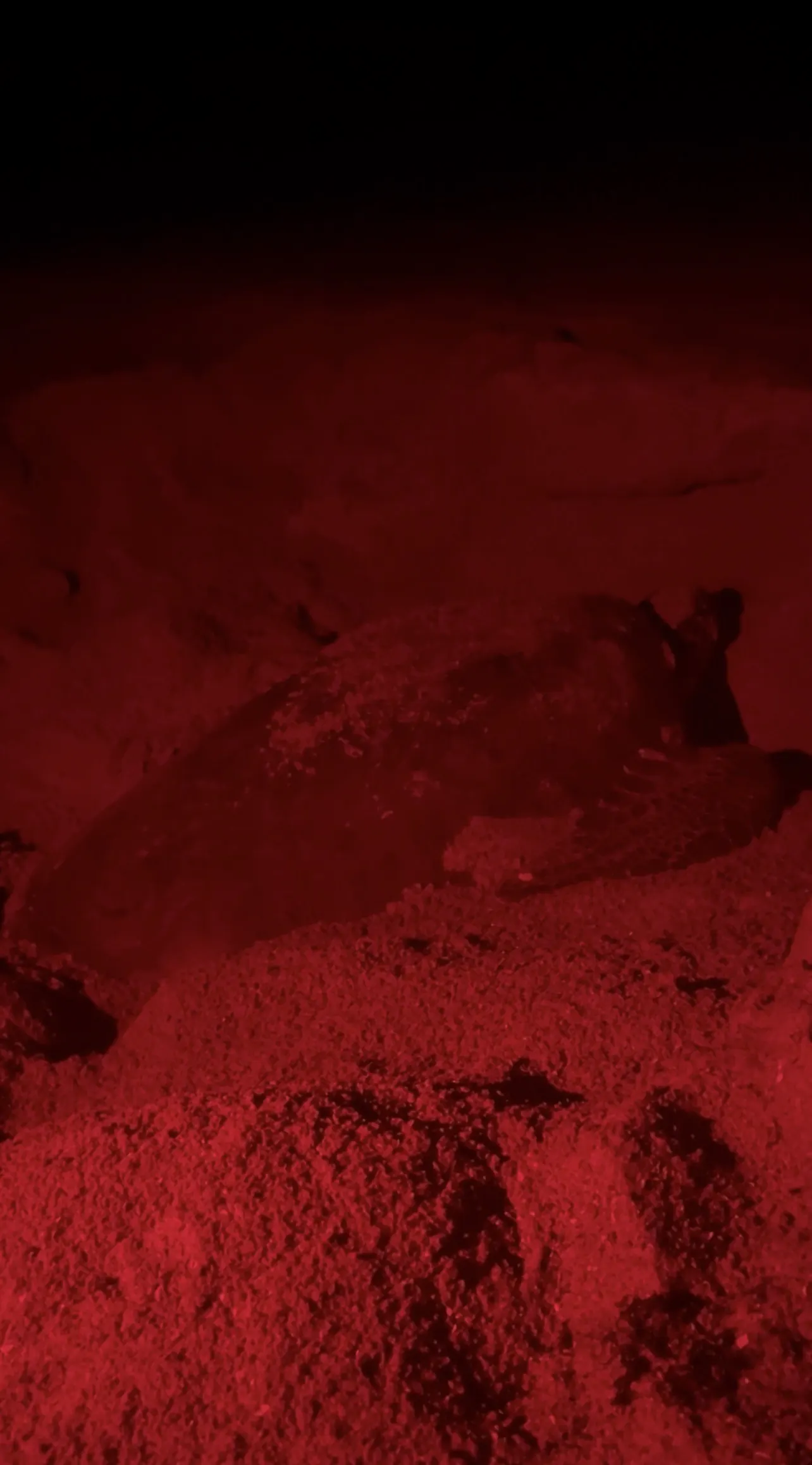
That is why a red-light photo should never be mistaken for permission to approach a turtle or shine a red light around the beach. Trained patrols may use carefully managed red lighting when necessary. Visitors should not search for turtles with a flashlight, use a phone light, or add any illumination to the scene. Darkness is part of the protection.
If You See a Nesting Turtle
Stop where you are and quietly back away. Give her as much space as possible, and do not gather a group around her.
Turn off flashlights, phone lights, camera flashes, drones, and any other light source. If you are staying beachfront, close blinds and reduce indoor lighting that shines toward the sand.
Keep children and pets close and calm. Do not let anyone walk behind, beside, or in front of her.
Observe only from a distance if you can do so without changing her behavior. If she turns, pauses, or heads back toward the water, do not follow her.
Follow instructions from authorized turtle patrol volunteers, park staff, or local officials. If the turtle appears injured, tangled, or in danger, contact local authorities or the Florida Fish and Wildlife Conservation Commission rather than intervening yourself.
What Not To Do
Do not touch the turtle, her tracks, her eggs, or a marked nest. It is illegal to handle protected sea turtles and their nests without authorization.
Do not take photos with flash or shine a light on her—even for a moment. A “quick picture” can disrupt a nesting attempt.
Do not stand between her and the Gulf, block her route, or crowd around her after she has finished nesting.
Do not bring dogs onto a nesting beach at night, leave chairs or tents out, or leave holes and sandcastles behind. Obstacles can stop or injure both nesting mothers and hatchlings.
The Survival Odds: Why Every Nest Matters
Sea turtles have astonishingly long odds. A widely used conservation estimate is that only about one out of every 1,000 hatchlings survives to adulthood; some estimates are even lower, depending on the species, location, and study. Hatchlings face predators, disorienting lights, storms, debris, and a dangerous first swim. Those that survive will spend years growing in the open ocean before a female eventually returns to nest.
That is why one successful nest matters so much. The adult on the beach has already beaten enormous odds. Protecting her chance to lay, and protecting the hatchlings that emerge weeks later, is a small act with a long reach.
How to Help Before You Leave the Beach
Fill in holes, knock down sandcastles, and take every chair, tent, toy, and piece of trash with you before sunset.
Keep beachfront rooms dark after dusk by closing blinds and switching off lights visible from the sand.
Respect roped-off or marked nests. They may look ordinary, but dozens of developing hatchlings can be just below the surface.
Share these simple rules with your group before a nighttime beach walk. A quiet, dark, obstacle-free shoreline gives turtles their best chance.
A respectful encounter is not measured by how close you get or how many photos you take. It is measured by leaving the turtle undisturbed enough to finish her ancient work and slip back into the Gulf.