Seeing Sea Turtle Hatchlings on Anna Maria Island: A Night Guide
A respectful guide to the rare joy of seeing sea turtle hatchlings on Anna Maria Island: when to go, what to wear, how to handle bugs, and exactly how to give tiny turtles the space they need.
Seeing a sea turtle hatchling make its determined little journey toward the Gulf is one of the most unforgettable moments on Anna Maria Island. It is also a rare, wild event—not a show to seek out or a moment to stage. The most helpful thing every visitor can do is be prepared, keep a respectful distance, and let trained turtle patrol volunteers lead the way.
First, Know the Season
Sea turtle nesting season on Anna Maria Island runs from May 1 through October 31. Most nests take roughly two months to incubate, so hatchling activity is generally more likely later in the season, especially from August into October. Hatchlings usually emerge after dark, but there is no reliable nightly schedule and many nests hatch without anyone seeing them.
The best way to experience a hatchling emergence is through an authorized, guidance-led opportunity when one is available. Do not dig into marked nests, wait beside a nest, or gather a crowd in hopes of seeing turtles. A quiet beach and a clear path to the water give hatchlings their best chance.
The Best Time to Go
If you are simply enjoying the beach during turtle season, go after sunset only when you can do so without adding light, noise, or foot traffic near marked nests. Dark, calm evenings after the summer heat has softened can be pleasant for a beach walk, but the right mindset matters more than the hour: you may not see a hatchling, and that is completely okay.
Before you head out, check local beach rules and any information posted by sea turtle patrol volunteers. If there is an active nest, follow directions from trained staff or volunteers immediately. They know when observation is safe and when a beach needs to stay clear.
What to Wear and Bring
Wear lightweight, long sleeves and long pants if you are sensitive to bites. A breathable shirt, loose trousers or leggings, and closed-toe shoes for the access path make an evening walk far more comfortable.
Bring drinking water, a fully charged phone kept dark and quiet, and a light layer for a breezy shoreline. Keep bags small so you are not tempted to set anything down on the sand.
Use insect repellent before you reach the beach and away from the waterline. Follow the label, avoid spraying near nests, hatchlings, or the Gulf, and never leave wipes, caps, or packaging behind.
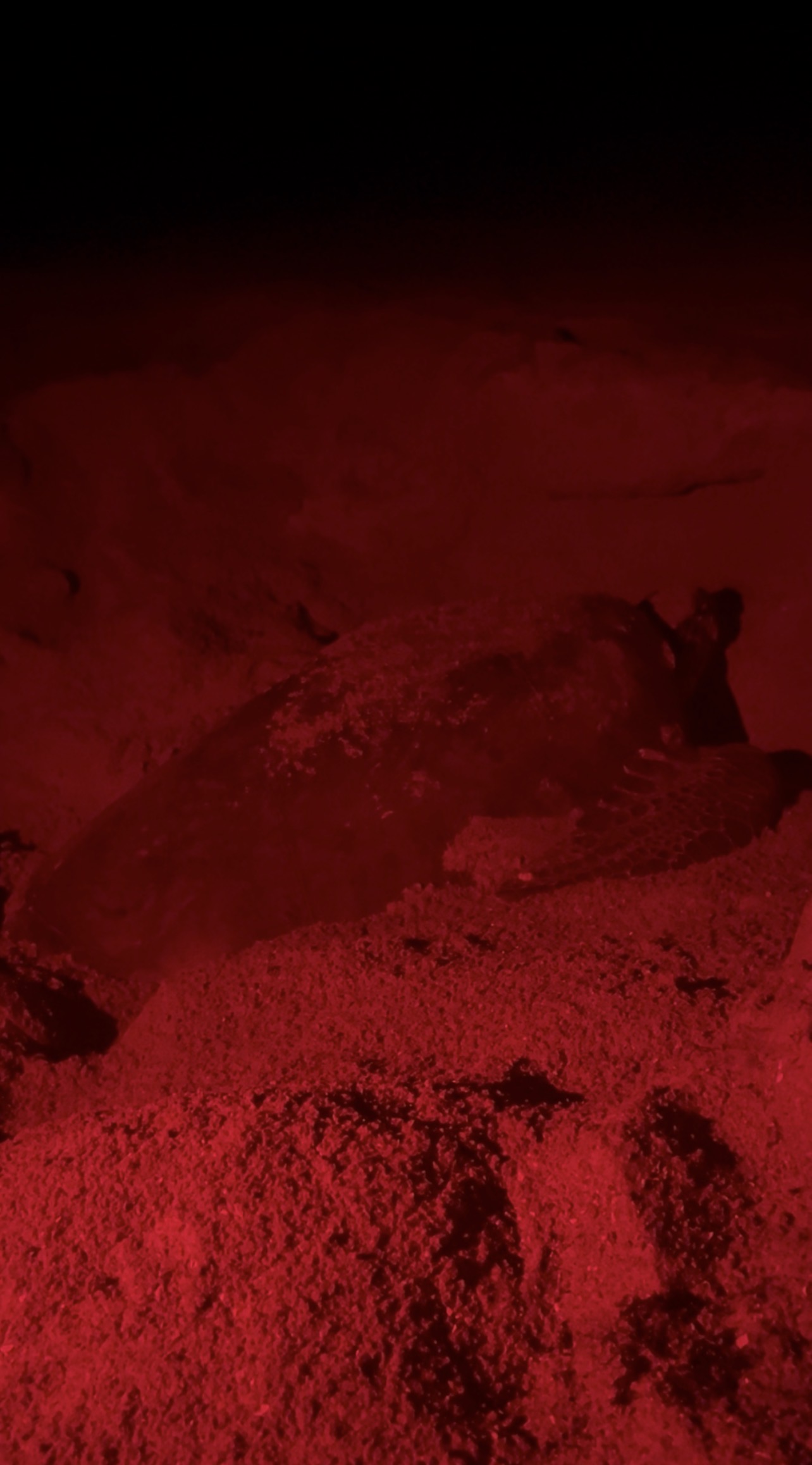
Skip bright clothing, light-up shoes, glowing toys, flashlights, phone screens, and flash photography. If local rules permit a dim red light for walking on an access path, keep it pointed down and never shine it toward the beach, a nest, or a turtle.
A Real Warning About Gnats and Other Bugs
Summer evenings on the island can bring no-see-ums, gnats, mosquitoes, and biting flies—especially when the air is still or you are near vegetation and dune walkovers. They are tiny, determined, and more than capable of ending a magical evening early.
Long, loose clothing is your first defense. An EPA-registered repellent used according to its label can help; apply it before leaving your rental or car so you are not spraying products near sensitive beach habitat. A gentle breeze often helps, while sunset and the hour after can be the buggiest. If bugs are relentless, it is better to head in than linger, add lights, or pace around a nesting area.
If You See a Baby Turtle: What To Do
Stop, stay quiet, and give it lots of room. Keep children, pets, chairs, and phones well back; do not form a circle around the hatchling.
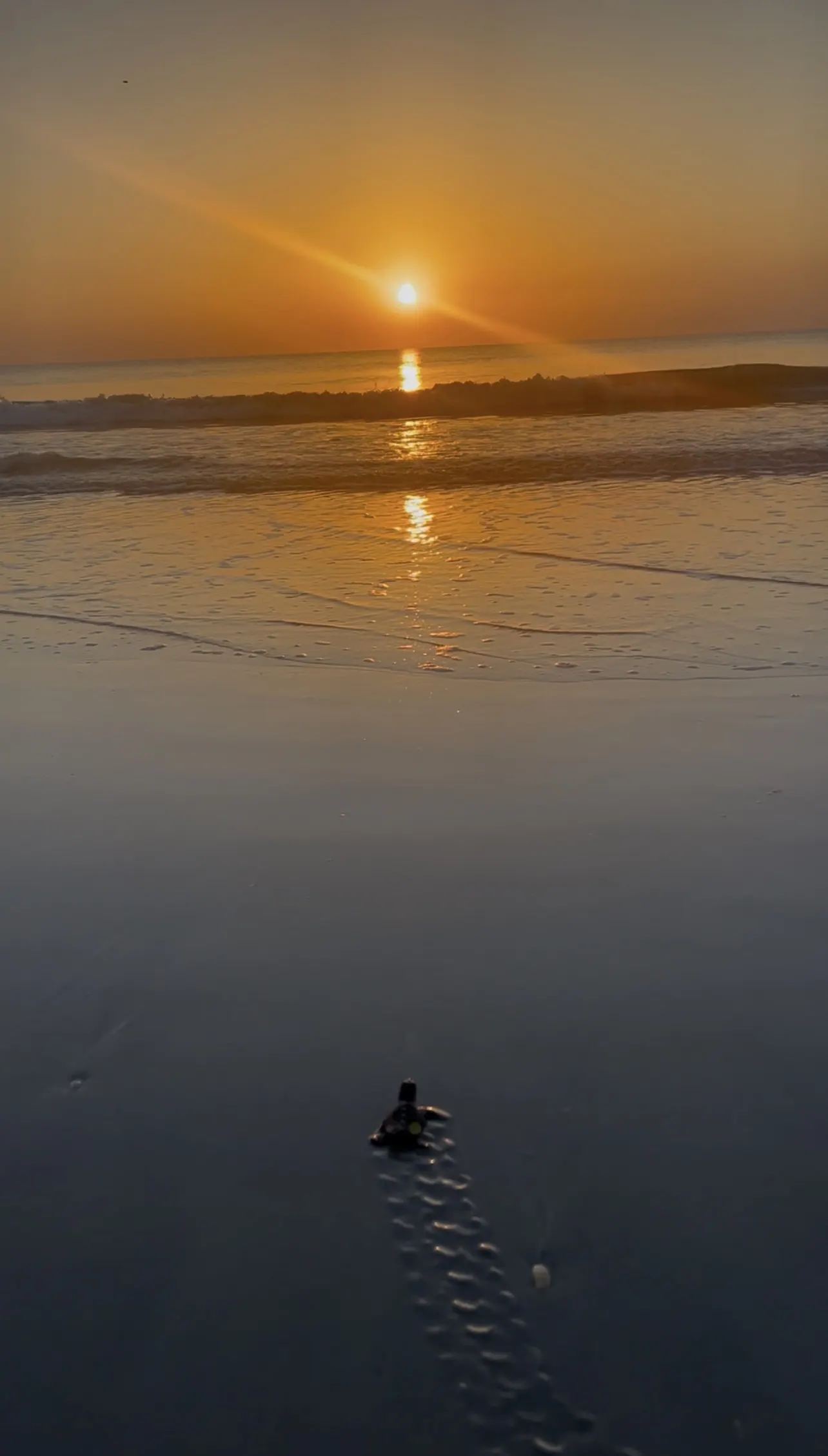
Let the hatchling choose its own path. These turtles use the natural brightness of the open horizon and the slope of the beach to find the water.
Turn off or block nearby lights where you safely can. Close blinds and move indoor lights away from beach-facing windows if you are staying near the shore.
Watch only from a distance and follow directions from an authorized turtle patrol volunteer, park ranger, or local official.
If a hatchling is heading inland, stuck, tangled, injured, or in immediate danger, keep people and pets away and contact local authorities or the Florida Fish and Wildlife Conservation Commission for guidance. A trained responder can decide what help is needed.
What Not To Do
Do not touch, pick up, move, feed, photograph with flash, or put a hatchling in the water—even when you think you are helping.
Do not use a flashlight, phone light, camera flash, drone, laser, or vehicle lights near a hatchling or marked nest.
Do not dig into a nest, move nest markers, or clear a route through dunes or vegetation.
Do not bring dogs or let pets investigate. Sea turtles are protected wildlife, and even a curious pet can cause serious harm.
Do not leave holes, sandcastles, beach gear, litter, or furniture on the beach overnight. Flatten holes and pack everything out before you leave.
The Best Kind of Turtle Encounter
The most memorable turtle encounter is one where the hatchling reaches the water without ever knowing people were there. Enjoy the privilege of the moment from a respectful distance, share the rules with your group before you arrive, and let the little turtle do the remarkable work it was born to do.