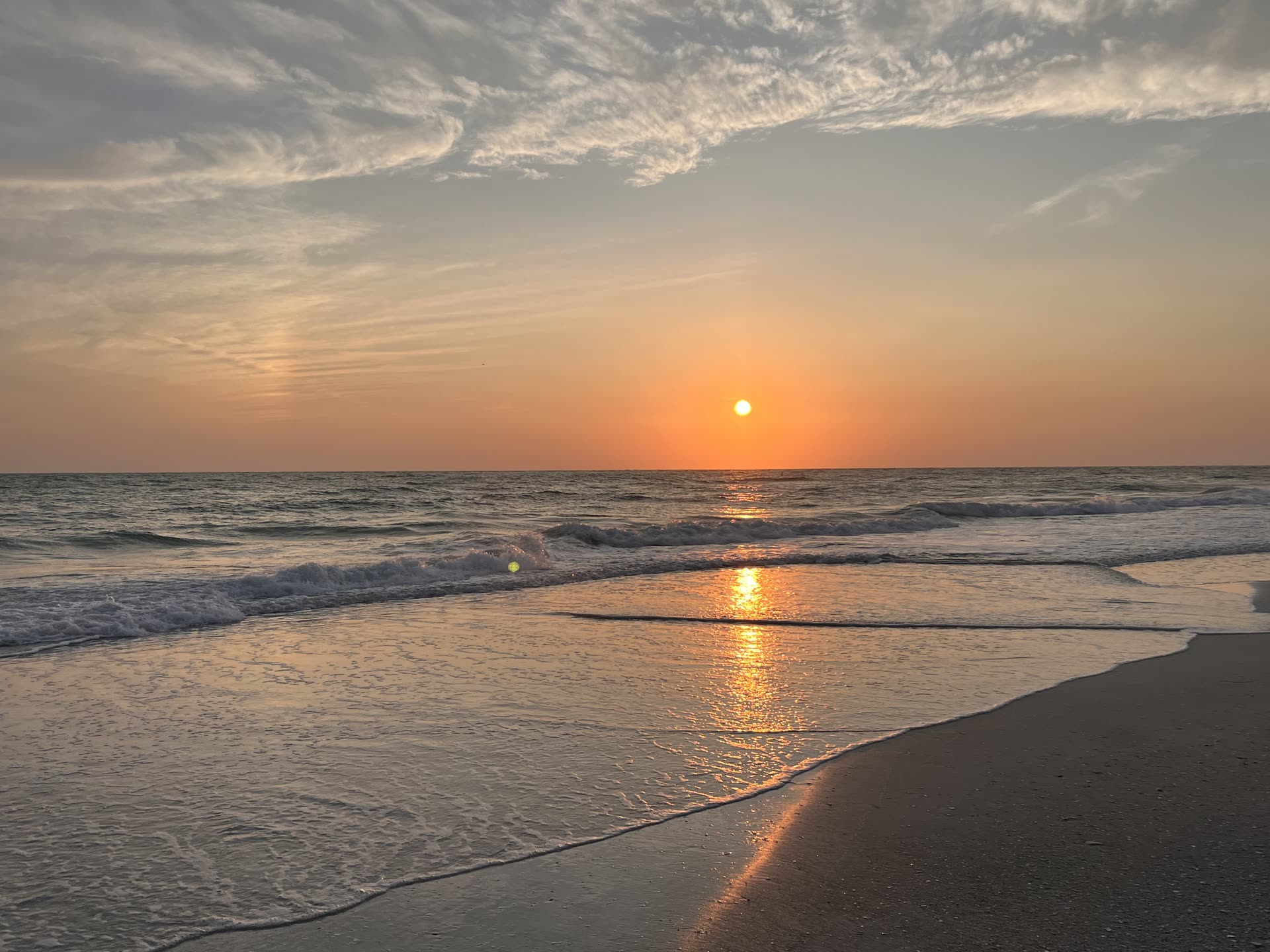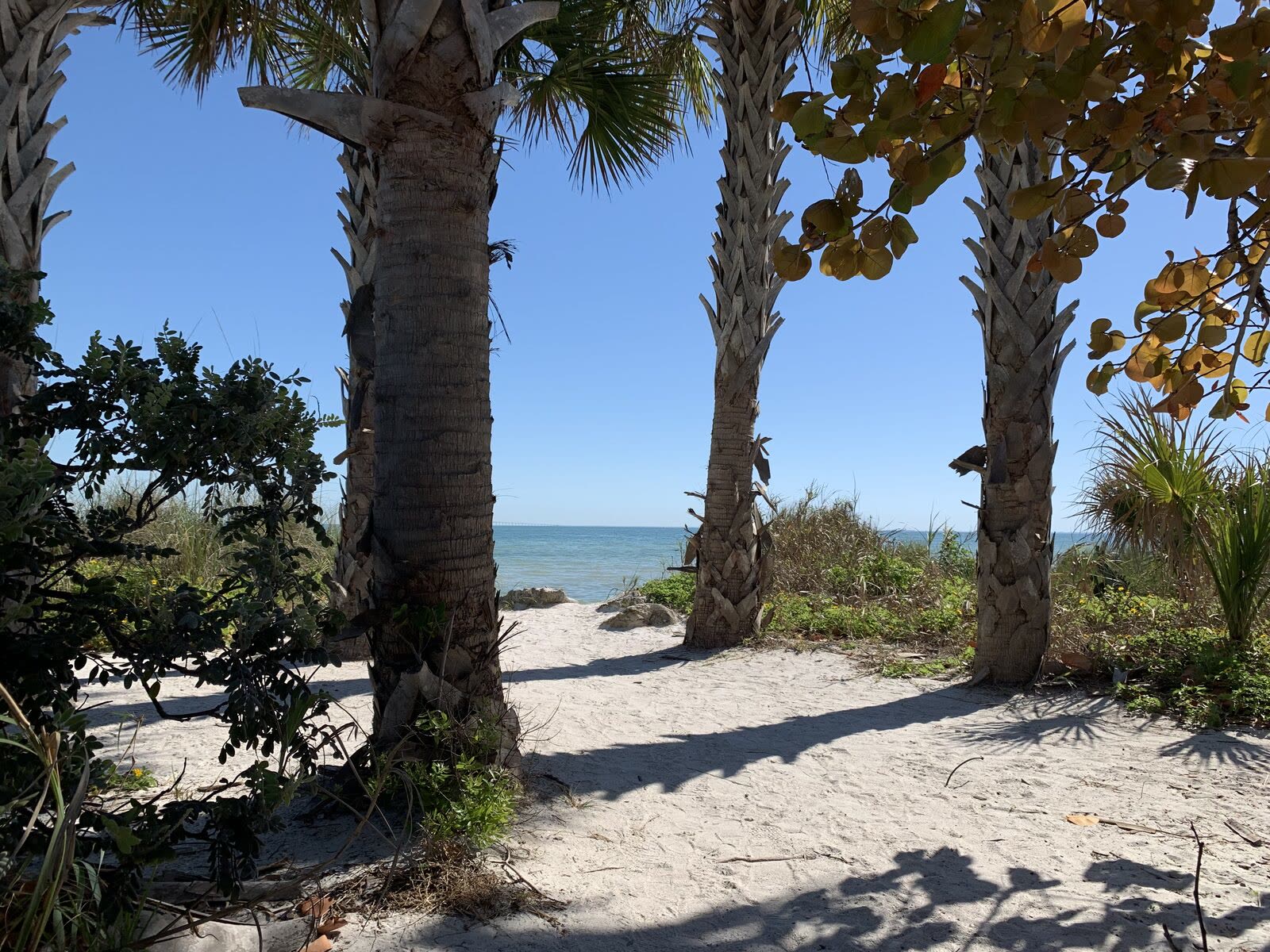
A practical guide to reading beach conditions on Anna Maria Island, protecting children near the water, recognizing a possible rip current, and knowing what to do if the current carries you away from shore.
A beautiful beach day can change quickly when the water is moving harder than it looks. On Anna Maria Island, the Gulf can be calm one moment and challenging the next—especially when wind, waves, changing weather, or moving tidal water are involved. The best beach plan is not to memorize a few rules; it is to check conditions, stay alert, and choose the safer option every time.
Tides, Waves, and Rip Currents Are Not the Same Thing
Tides are the regular rise and fall of the water. They can change the depth of the shallows, cover or uncover sandbars, and make water move faster around passes, channels, and structures. Waves are driven largely by wind and weather. A rip current is a narrow, fast-moving flow of water that heads away from shore, often through or beside breaking waves.
That distinction matters because a sunny day and a small-looking surf do not automatically mean safe water. Rip currents can form on pleasant beach days, and they are not always obvious from the sand. Treat the water as a changing environment rather than a pool.
Check Before You Go In
Look for posted beach warning flags and obey them. Conditions can change during the day, so check again after lunch, after a storm moves through, or if waves begin to build.
Choose a lifeguarded beach when possible, set up near the lifeguard stand, and ask the lifeguard about the day’s conditions before swimming.
Check the weather and local beach or rip-current forecast before leaving your rental. If you are unsure whether the water is safe for your group, stay out.
Be especially cautious near passes, piers, jetties, rock structures, channels, and inlets. Moving water can be stronger there than it appears.
What to Look Out For in the Water
No single visual clue can confirm a rip current, and you should never rely on spotting one yourself. Still, a possible rip may look like a darker or smoother channel cutting through the breaking waves, an area with fewer breaking waves, water that seems to be moving steadily away from shore, or foam and floating debris drifting seaward. If something looks different or uncomfortable, choose another area or do not enter.
Other reasons to pause include waves that are suddenly larger or more frequent, a drop-off that puts children over their heads, lightning or approaching storms, and a child becoming tired, cold, or frightened. The safest decision is often made before anyone gets wet.
Keep Children Within Reach
Children need active, close supervision at the beach—especially in moving water. A beach chair, a phone, a conversation, or a photo is not supervision. Pick one sober, attentive adult as the dedicated water watcher and switch that role clearly rather than assuming someone else is watching.
Stay within arm’s reach of young children and anyone who is not a confident open-water swimmer. A wave can knock a child down or carry them into deeper water in seconds.
Keep children out of water that is deeper than their comfort and skill level. Ocean swimming is different from swimming in a pool, even for children who have taken lessons.
Have a simple boundary: children swim only between a named adult and the shore, never past a set depth or away from the group.
Use U.S. Coast Guard-approved life jackets for children who need them, particularly on boats or near moving water. Inflatable toys, water wings, and noodles are not safety devices and do not replace close supervision.
Count children often—before entering the water, after every break, and before leaving the beach. If a child is missing from the group, check the water first and get help immediately.
If You Get Caught in a Rip Current
The first job is to conserve energy. A rip current pulls away from shore; it does not pull a swimmer under. Panicking or trying to power straight back to the beach can exhaust even a strong swimmer.
Stay calm, float, or tread water. Take a breath and keep your energy for the next safe move.
Do not fight the current by swimming directly against it toward shore.
If you can, swim parallel to the shoreline—or at an angle with the waves—until you are out of the fast-moving flow. Then use the waves to help you move back toward shore.
If you cannot get out of the current, keep floating, face shore, raise an arm, wave, and call for help. Lifeguards and nearby beachgoers need to know you are in trouble.
Once you are out of the current, do not re-enter until you have spoken to a lifeguard or conditions have clearly improved.
If You See Someone Else Being Carried Away
Alert a lifeguard right away. If no lifeguard is present, call 911 and point out the person’s location. Throw a flotation device, boogie board, cooler, or other object that floats if you can do so safely. Do not rush into the current yourself unless you are trained and have appropriate rescue equipment—many rescuers become victims when they enter the water without a plan.
Make a Safer Beach Day
Before every swim, pause for a 30-second family check-in: What flags are flying? Who is the water watcher? How far may the children go? Where is the lifeguard? What will everyone do if they need help? That small routine creates a clear plan before the water becomes stressful.
When in doubt, do not go out. There will be another beach day, another swim, and another sunset. Choosing the sand, the pool, or a shore-side walk when conditions are uncertain is a smart decision—not a missed vacation.
For official rip-current guidance, visit the National Hurricane Center’s “Safe Swimming” and “Survive a Rip Current” resources before your trip.